TREAT THYROID CONDITIONS ONLINE
Chat with a medical provider without leaving your home. Manage thyroid conditions and medications for only $49 for your first month.
HOW IT WORKS
Thyroid condition management made easy—all from your phone

Tell us about yourself
Our smarter, faster, virtual intake process gets your doctors the info they need to care for the whole you.

Get care on your schedule
Text us when you’re free—we make ourselves available day and night. For virtual check-ins, refills, and more.

Manage your health with ease
We’ll help you stick to your plan for managing a chronic disease*, changing a habit, and living healthier—by phone.
READ MORE
Thyroid Treatment Online FAQs

Can I see a thyroid doctor online?
Yes, you can safely and securely receive effective and convenient thyroid treatment through our qualified telehealth providers at K Health. Your visit will be 100% virtual, allowing you to manage your condition from the comfort of your home. The standard of care you will receive is the same high standard of care you would receive from an in-person visit. Although, most of the time, our telehealth appointments are at a lower cost to you.
Whether you already have a thyroid condition diagnosis or think you may have one, K Health can provide the care and testing you need. Schedule an appointment through K Health, and our medical provider will ask you several questions about your recent symptoms, past medical history, and current medications.
After reviewing your medical information, our provider will discuss a treatment plan with you and order any needed medications to your preferred pharmacy. If there is a need for you to be seen in person for further assessment, our medical provider will let you know.
What is hypothyroidism?
Your thyroid is a small butterfly-shaped gland in the front of your neck. It controls how your body uses energy. Hypothyroidism is a thyroid condition affecting nearly 5% of the population. It occurs when your thyroid gland does not produce enough thyroid T3 or T4 hormones. Several things can cause your thyroid to stop working properly, such as radiation damage, medications, autoimmune illnesses, thyroid infection, or surgical thyroid removal.
Symptoms of hypothyroidism may include:
- Weight gain
- Fatigue
- Sensitivity to cold
- Dry skin
- Thinning hair
- Low mood
- Constipation
- Muscle and joint aches or stiffness
What is hyperthyroidism?
Hyperthyroidism is when your thyroid makes too many thyroid hormones. This condition affects about 1 out of 100 Americans over 12 and is more common in people over 60. Several conditions can cause your thyroid to be hyperactive, including autoimmune disorders, thyroid nodules, thyroid inflammation, too much iodine in your diet, or a noncancerous pituitary tumor.
Symptoms of hyperthyroidism may include:
- Weight loss despite an increased appetite
- Nervousness, irritability
- Trouble sleeping, fatigue
- Rapid or irregular heartbeat
- Shaky hands
- Sweating or trouble tolerating heat
- Frequent bowel movements
Can I refill my thyroid prescription online?
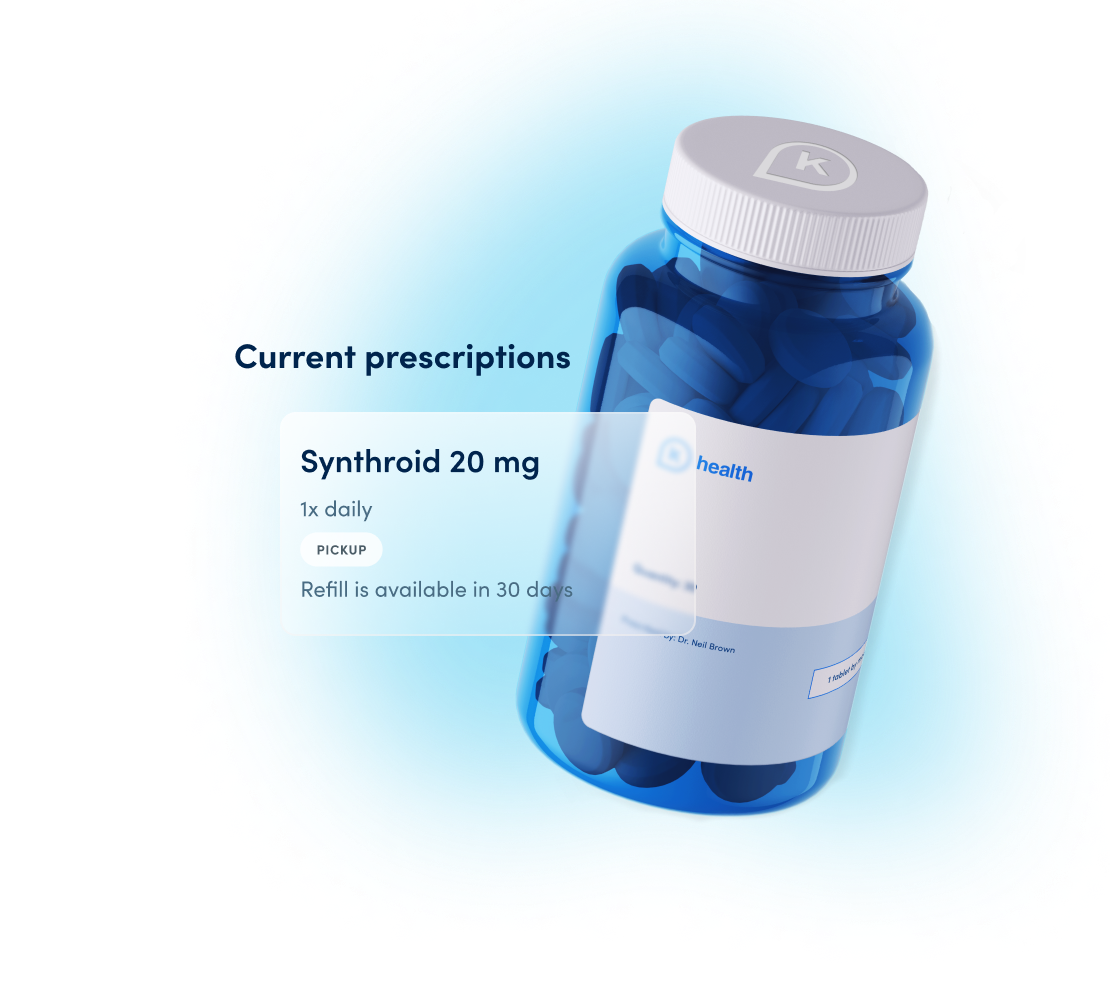
Yes, make an appointment with K Health and speak with one of our medical providers about your prescription refill. If appropriate, they can send your refill prescription to your preferred pharmacy, where you can pick it up. Thyroid management doesn’t necessarily require a hands-on physical exam for your medication refill.
How are thyroid disorders treated?
Diagnosis of a thyroid disorder typically comes after a medical provider runs thyroid blood tests to confirm what is going on. In some cases, additional blood tests or imaging may be needed as well.They will follow this up with a treatment plan.
Treatment of hypothyroidism typically involves replacing your thyroid hormone with medications such as levothyroxine (Synthroid) or desiccated thyroid (Armour). People with hypothyroidism typically take their medication first thing in the morning before they have breakfast. After taking the medication for six to eight weeks, your medical provider will order a follow-up blood test to see how the medication is working.
After reviewing the results, they may adjust your dose. Each time your medication dose changes, you’ll need a follow-up blood test until you’ve reached a dose that works for you. Never stop taking your medication without first consulting with your medical provider.
Treatment of hyperthyroidism depends on what is causing it and how severe your condition is. It may include medicines, radioiodine therapy, or thyroid surgery. Medications may include beta blockers or antithyroid medications. Radioiodine therapy involves taking radioactive iodine capsules. This usually results in the person developing hypothyroidism in the future, but hypothyroidism can be easier to manage than hyperthyroidism. Some people opt to have part of their thyroid removed to try and manage their hyperthyroidism. Your provider will discuss the different treatment options with you and will recommend the best for you.

Avoid the stressful search for care
Join primary care