GET RASH TREATNENT ONLINE
Chat with a medical provider about your rash today. Only $49 for your first month of membership.
• Medical providers available 24/7
• Same-day prescriptions
• No appointment or insurance needed
• Pay $49 for your first month of unlimited visits or $73 for one visit
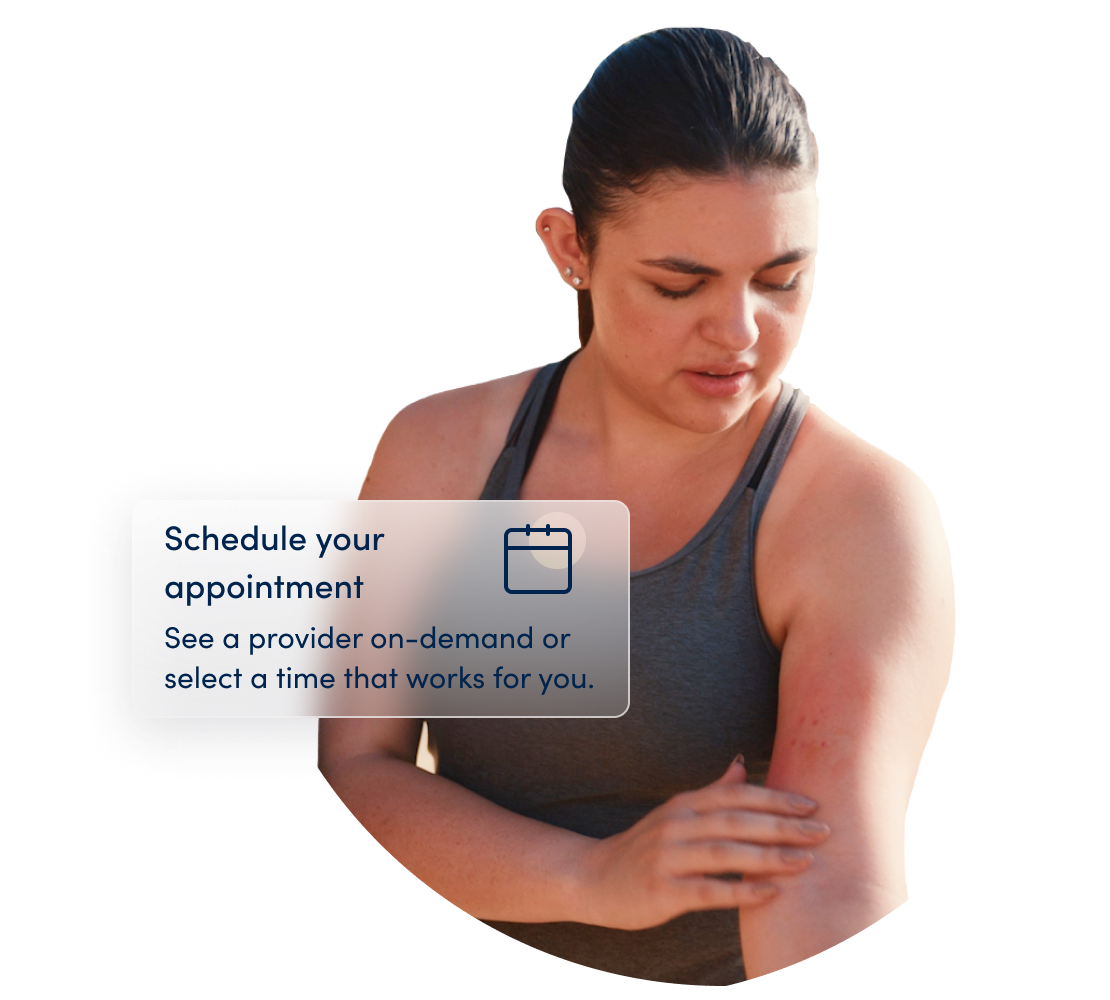
The benefits of getting treatment with K Health
Instant info
Our smart Symptom Checker brings together data from millions of People Like You to provide you with information–for free.
Care when you need it
Doctors are available 24/7 via text—no appointment or insurance necessary.
Same-day relief
Get medication ASAP and get on with your day. If your symptoms don’t improve, we’re always a text away.
No wasted time
Get the treatment you need without changing your plans. You won’t miss waiting at an urgent care.
LEARN MORE
Rash FAQs
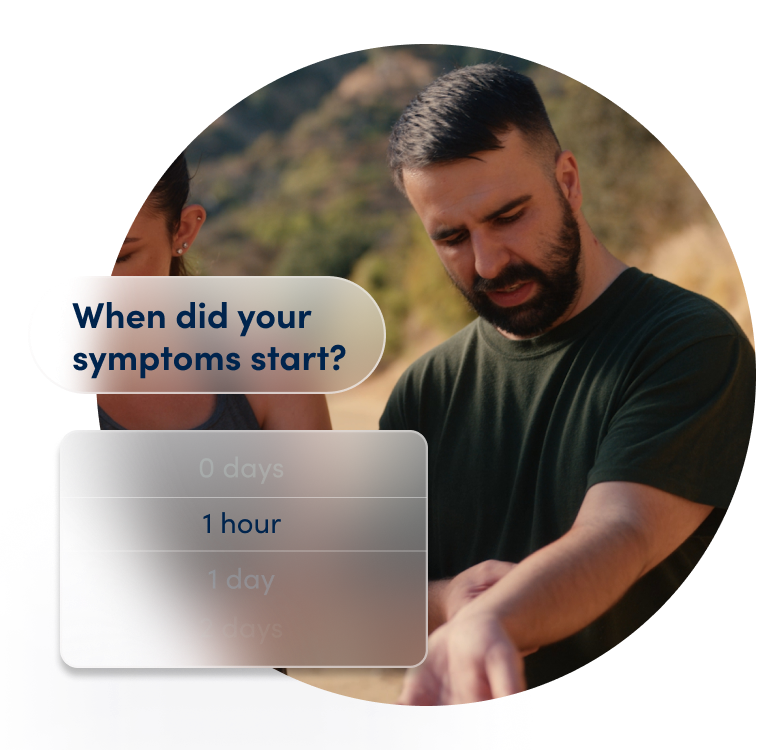
What types of rashes can be treated online?
Rashes are areas of irritated and sometimes swollen skin. Most times, they are itchy, painful, scaley, and red. Sometimes rashes lead to blisters or areas of raw skin.
If you notice a rash starting to form on your skin or another type of skin reaction, seek medical treatment to care for the rash. You can do this through an appointment on a telehealth platform, such as K Health. Telehealth appointments are safe, secure, and effective at treating several skin rashes and other conditions related to your hair, skin, and nails, such as:
- Itchy skin
- Eczema
- Psoriasis
- Warts
- Rosacea
- Skin infections
- Skin rashes
- Acne
- Itchy scalp and other scalp conditions
- Nail fungus and other nail concerns
What causes rashes?
Several reasons exist for why rashes form on the skin.
Allergic contact dermatitis
Allergic contact dermatitis is when your immune system overreacts to a normal substance and treats it like a threat. When your skin is exposed to the substance, your immune system sends out a strong response causing you to develop a rash that is usually very itchy.
Common causes of allergic dermatitis include:
- Cosmetics
- Perfumes
- Poison ivy and poison oak
- Certain types of jewelry
Irritant contact dermatitis
Irritant contact dermatitis occurs when certain chemicals damage the skin and cause a rash to form that may be painful.
Common causes of irritant contact dermatitis include:
- Strong soaps
- Household cleaners
- Pesticides
- Body fluids, for example, diaper rashes caused by urine or stool
- Nail polish remover
Other causes for rashes
Several other conditions may cause rashes, such as:
- Skin disorders like eczema and psoriasis
- Insect bites
- Infections such as shingles, chicken pox, or measles
- Overheating, causing heat rash
How are rashes treated?
The treatment for your rash depends on the underlying cause, what area of your skin is affected, and the severity of your symptoms. Some types of rashes clear up on their own after a few days to a week.
Your telehealth provider may ask you questions to get to the source of the rash, such as:
- When did the rash start, and do you have any other symptoms?
- Have you recently tried a new lotion, soap, or laundry detergent?
- Have you recently been walking in an area where there may be poison ivy or poison oak?
- Are you wearing a new type of cosmetic or perfume?
- Have you recently been around anyone sick?
- Do you have an underlying skin condition?
- Have you recently been spending time in the sun?
Depending on what your medical provider determines, they may make some of the following suggestions:
- Calcineurin inhibitors applied to your skin as a cream or ointment
- Topical steroids such as hydrocortisone or prescription ointments or creams
- Over-the-counter (OTC) or prescription antifungal creams
- Prescription antibiotics for a skin infection
- Phototherapy involves exposing your skin to a certain amount of natural or artificial light daily
- Using oral or injectable corticosteroids for severe cases
How can I get rid of a rash?
Sometimes you can get rid of a rash without a medical provider’s help. For instance, these home remedies may help get rid of a rash:
- Immediately wash an area potentially exposed to poison ivy or poison oak with soap and water.
- Lukewarm baths containing ground oatmeal or baking soda may help with itch relief.
- Diligently applying fragrance-free oil or water-based lotions may help.
- Sometimes, taking vitamin D and probiotics help clear up skin rashes.
- Taking an OTC allergy medication can help keep allergic dermatitis at bay.
- Wearing loose-fitting cotton clothing helps prevent chafing or rubbing of the skin.
- Applying a cool washcloth to the rash sometimes soothes irritation.
- Applying a non-prescription anti-inflammatory ointment containing steroids, such as hydrocortisone, can relieve itching.
- Try swapping your scented laundry detergent for a non-scented detergent. Try this also with other products you put on your skin.
- Apply a baking soda paste by mixing lukewarm water with baking soda into a paste-like substance.
- Apply aloe vera to soothe your skin.
Are rashes serious?
Most rashes are not serious, although some can be. Seek emergency medical attention if you are experiencing the following symptoms:
- Difficulty breathing or swallowing
- A rash around your eyes, mouth, or genitals
- Severe skin pain
- Swelling in your face, especially around your eyes
- Itching that is so severe you can’t sleep
- Your rash is coming from the majority of your body
- You are experiencing a fever with your rash
Are antibiotics used to treat rashes?
Antibiotics treat bacterial infections. If your rash is occurring because of a bacterial infection, your medical provider may write you a prescription for an antibiotic.
A common skin condition caused by bacteria is cellulitis. Cellulitis causes pain, redness, and swelling in the skin. It occurs when bacteria enter breaks in the skin, such as cuts, burns, bug bites, or through cracks in dry skin. Cellulitis requires antibiotics for treatment.

Stephanie Foley, MD

Neil Brown, MD

Heather Hylton, MS, PA-C

Lynn Byars, MD

David Morley, MD
See a medical provider you trust
-
Our licensed providers were trained at top-tier medical institutions
-
They use advanced health AI technology to provide you with personalized care
-
And they’re available 24/7, just a text away

Frequently asked questions
Do you provide doctor’s notes and sick notes?
During a visit, K Health-affiliated medical providers can only provide a note stating the date when they saw you and that care was provided.
Recommended content
All articles